
ISO 14025 Standard: Transparency and Reliability for Environmental Performance
Climate change is one of the greatest environmental challenges of our time. The increasing concentration of greenhouse gases in the atmosphere has led to serious consequences such as global warming, rising sea levels, extreme weather events, and biodiversity loss. To combat this global crisis, concrete steps must be taken in every sector to achieve environmental sustainability goals. With its 39% share of global carbon emissions, the construction sector is one of the most critical players in this fight. The ISO 14025 Standard provides an important framework for transparently reporting and evaluating environmental impacts in this process.
What is the ISO 14025 Standard?
ISO 14025 is an international standard designed to present the environmental performance of products transparently and measurably. This standard serves as a framework for the creation of Environmental Product Declarations (EPDs), allowing for scientifically based assessment and reporting of a product’s environmental impact throughout its lifecycle.
ISO 14025 and Life Cycle Assessment (LCA)
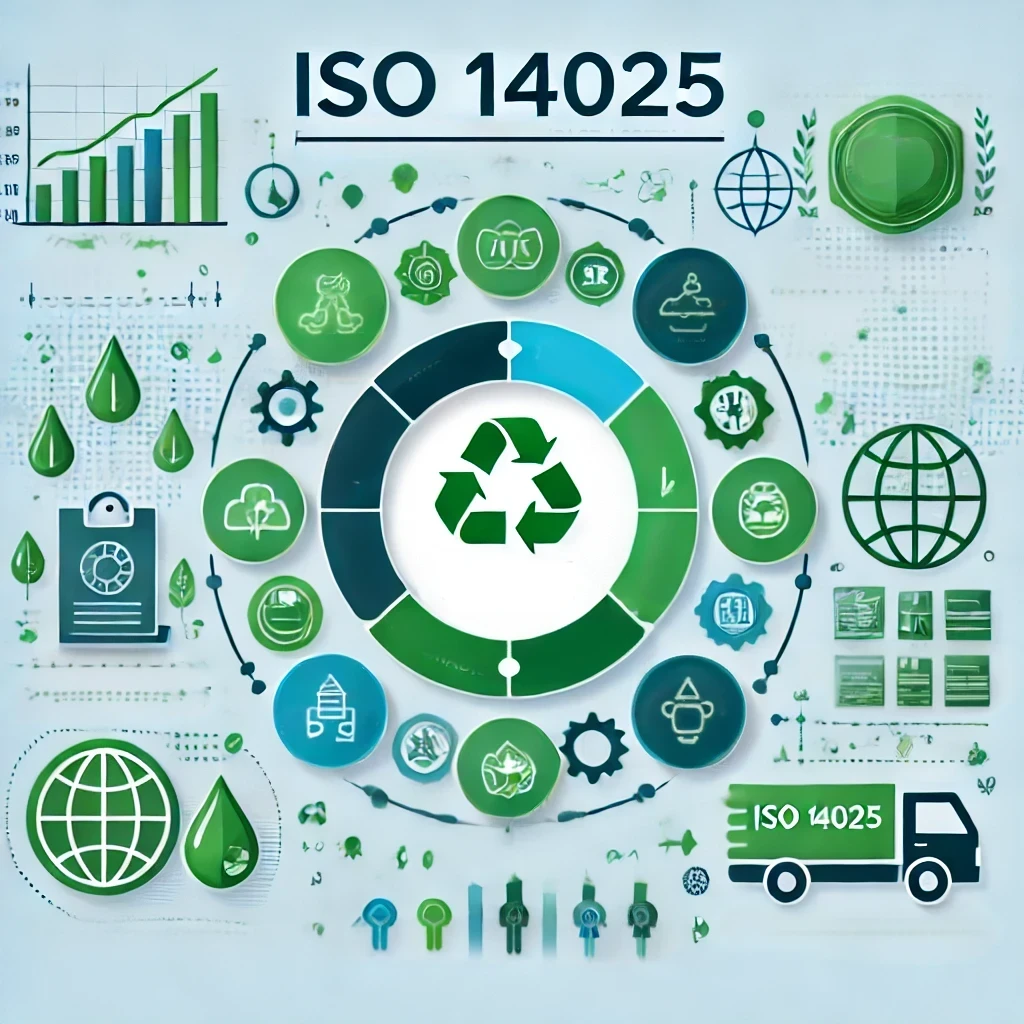
The ISO 14025 Standard is based on Life Cycle Assessment (LCA) principles. LCA analyzes all stages of a product’s lifecycle—from raw material extraction, production, transportation, and use to waste management—revealing its environmental impact. ISO 14025 standardizes this process, ensuring that products are assessed comparably and reliably.
The Contribution of ISO 14025 to Different Sectors
ISO 14025 is applicable across various industries to minimize environmental impacts. It is particularly valuable in construction, energy, manufacturing, chemical, and food industries, helping to develop more sustainable processes. Key contributions of ISO 14025 to different sectors include:
- Material Selection: EPDs based on ISO 14025 help in choosing environmentally friendly materials. For example, using low-carbon cement or recycled plastics can significantly reduce carbon emissions.
- Carbon Footprint Reduction: Lifecycle assessments identify opportunities for reducing the carbon footprint, offering manufacturers a roadmap for improvement.
- Green Building Certifications: ISO 14025 serves as a fundamental standard for EPDs used in green building certification systems. Certifications such as LEED, BREEAM, and Mostadam evaluate projects based on ISO 14025-compliant EPDs.
ISO 14025 and Transparency
One of the biggest advantages of ISO 14025 is that it ensures transparency in environmental information. This transparency allows manufacturers to enhance their environmental performance while empowering consumers to make informed choices. As a result, it fosters greater environmental awareness across society.
Conclusion
The ISO 14025 Standard is a powerful tool for achieving environmental sustainability goals. By standardizing the process of measuring and reporting environmental impacts throughout a product’s lifecycle, it provides a reliable foundation for both manufacturers and consumers. In high-emission industries such as construction, this standard guides sustainable material selection and eco-friendly design processes.
The adoption of international standards like ISO 14025 plays a critical role in building a greener and more sustainable future in the fight against climate change.