

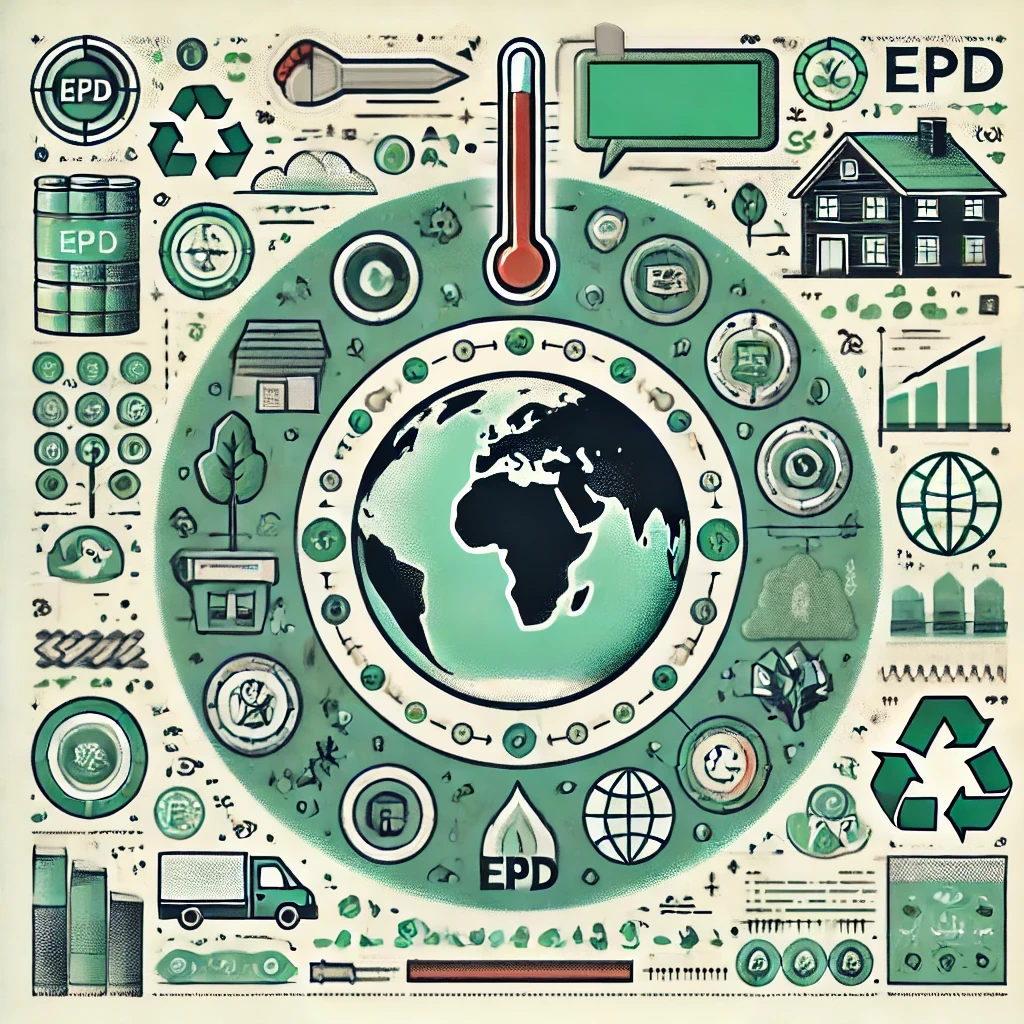
Climate change is one of the greatest environmental challenges in human history. The increasing concentration of greenhouse gases in the atmosphere leads to global warming, resulting in rising sea levels, extreme weather events, and biodiversity loss. In this process, taking concrete steps toward environmental sustainability has become a necessity in every sector. The construction industry is one of the most significant contributors to this issue, as it is responsible for 39% of global carbon emissions. At this point, tools such as the Environmental Product Declaration (EPD) play a crucial role in reducing the environmental impacts of the sector.
What is an Environmental Product Declaration (EPD)?
An Environmental Product Declaration (EPD) is a document that transparently and measurably presents the environmental impacts of a product throughout its lifecycle. This document is prepared in compliance with international standards such as ISO 14025 and EN 15804 and is usually verified by third-party organizations. EPDs provide manufacturers with the opportunity to scientifically express the environmental performance of their products.
The Role of EPD in Combating Climate Change
EPDs contribute to fighting climate change, particularly in the construction industry, by promoting sustainable product design. With EPDs, the carbon footprint and other environmental impacts of products can be calculated, allowing for more sustainable material selection. For example, choosing low-carbon concrete or recycled steel can significantly reduce the total carbon emissions of a project.
EPD and Sustainable Design
Sustainable building design is a key strategy in combating climate change. This approach aims to reduce energy consumption, integrate renewable energy sources, and use eco-friendly materials. EPDs help designers and engineers assess the environmental impacts of materials, enabling them to make informed decisions. By evaluating the EPDs of materials used in a building project, products with lower energy and water consumption, reduced greenhouse gas emissions, and higher recyclability can be selected.
EPD and Green Building Certification Systems
EPDs are closely linked with green building certification systems. International certification programs such as LEED and BREEAM aim to enhance the environmental performance of projects and include EPD-based assessments. The use of EPD-certified products can help projects earn additional points in certification processes. As a result, certified buildings stand out as environmentally responsible and more valuable in the market.
Conclusion
Climate change is a global crisis that requires collaboration among individuals, businesses, and governments. The Environmental Product Declaration (EPD) serves as a powerful tool in this fight. Particularly in the construction sector, the use of EPDs in material selection and design processes plays a critical role in reducing carbon emissions and contributing to a more sustainable future.
Sustainability is not just a responsibility for today—it will shape the lives of future generations. Therefore, the widespread adoption of tools like EPDs is of great importance for both the industry and society as a whole.